Relocate to Serbia
Moving from Ukraine Ukrainian RS

Moving to Serbia from Ukraine: temporary protection and practical next steps

What temporary protection status covers in Serbia, how to apply, and the practical steps for settling in.

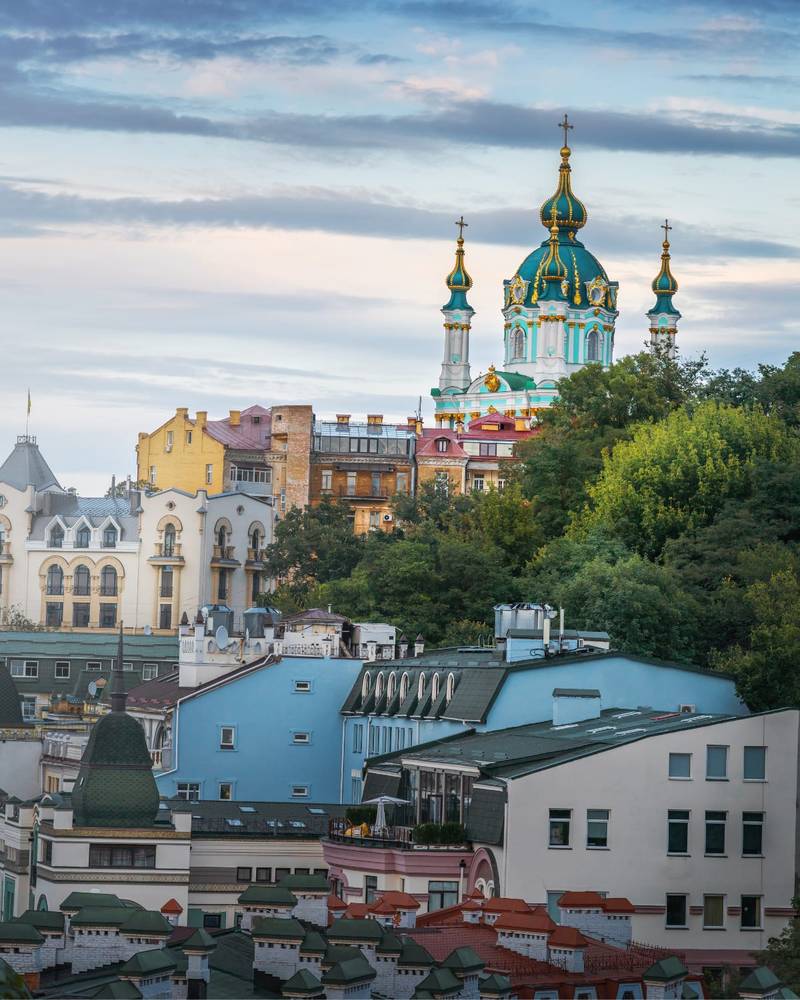
St. Andrew's Church above the old rooftops of Kyiv, Ukraine
The basics

Visa requirements for Ukrainian passports.

Visa and residence requirements for Ukrainian passport holders
Type Duration Requirement Note
Tourist entry Short stays Visa-free No entry visa needed; a residence permit is needed to stay longer
Extended stay 90+ days Residence permit Apply before your visa-free stay expires
Work authorisation 1 year Work + residence Employer or self-sponsorship
Permanent residence Indefinite After a qualifying period Continuous legal residence
Why Ukrainian nationals move here

A soft landing in Central Europe.

Fast, humanitarian access

Temporary protection exists specifically to provide fast access to residence, work, and services without requiring the longer document-heavy process a standard residence application involves.

An existing support network

Belgrade has the largest concentration of services, community organizations, and support infrastructure for displaced Ukrainian nationals; other regional cities have also received arrivals.

Practical rights that matter day to day

The right to work without a separate permit, access to public healthcare, and free public education for children are the practical rights this status is intended to provide.

A path that doesn't presume your circumstances

Some readers are here temporarily, some are building a longer-term base. This page tries to serve both without presuming which applies to you.

How it works from Ukraine

From application to residence card.

  1. 01

    Apply for temporary protection promptly

    Register with the Commissariat for Refugees and Migration as soon as possible after arriving in Serbia.

  2. 02

    Gather identity and family documents

    Passport or ID, and family documents proving relationships, translated where required.

  3. 03

    Register your address

    Needed to access local services, including healthcare and school enrollment for children.

  4. 04

    Enroll children in school

    Free public education is available to children under temporary protection; timing matters for a smooth transition.

  5. 05

    Review your long-term options

    Confirm whether temporary protection, a standard residence route, or a combination fits your circumstances as they evolve.

  6. 06

    Settle in

    Housing, healthcare, and a renewal reminder so nothing lapses after you're set up.

Come prepared

Ukraine documents you'll typically need.

  • Passport or national ID - the baseline document for registering with the Commissariat
  • Family documents (marriage or birth certificates), translated where required, if applying with family members
  • Proof of address in Serbia, needed to access local services once you've settled somewhere
  • School records for children, to support enrollment in the Serbian public school system

Exact documents depend on your route - we send a tailored checklist after your consultation.

Document disruption is accounted for

Ukraine has faced significant practical disruption to civil registry and document-issuance services since 2022 in some regions. Humanitarian-protection processes generally account for this more flexibly than standard immigration document requirements, though outcomes depend on your specific case.

Confirm current expiry and renewal terms directly

We do not have a single, dated, official Serbian government source confirming the exact current expiry or renewal terms of this status. Confirm directly with Serbia's Commissariat for Refugees and Migration.

Ukrainian nationals displaced since February 2022 can apply for temporary protection status in Serbia, which grants the right to reside, work, and access public healthcare without a separate visa or work permit. This guide covers the practical steps.

Book a free 30-min eligibility call to review your situation and the options available to you.

A note on how this page is written

This page is written for Ukrainian nationals navigating displacement, a situation that differs materially from other relocation journeys covered on this site. We keep the focus practical: what temporary protection covers, how to apply, what documents you need, and how to settle in. We do not offer political commentary, and we do not assume every reader’s circumstances are the same.

Temporary protection: what it is and who qualifies

Temporary protection can be granted in Serbia to Ukrainian nationals forced to leave Ukraine because of the war, and to their family members who legally resided in Ukraine until 24 February 2022, according to guidance summarized in Visit Ukraine’s overview of temporary protection in Serbia. Serbian authorities have extended this protection for as long as the underlying grounds - the circumstances that led to displacement - remain in place.

This is a distinct legal mechanism from the standard non-EU residence permit routes covered elsewhere on this site (employment, self-employment, real estate, family reunification). It exists specifically to provide fast, humanitarian access to residence, work, and services without requiring the longer document-heavy process a standard residence application involves.

How to apply

Ukrainian nationals seeking temporary protection are generally expected to apply to Serbia’s Commissariat for Refugees and Migration promptly after crossing the border into Serbia. Bring your passport or national ID, and any family documents (marriage or birth certificates) that establish the relationships relevant to your application.

If you are already in Serbia and have not yet applied, or your circumstances have changed since an earlier application, the Commissariat is the correct point of contact to clarify your options - this is not something we can resolve on your behalf through this website, but we can help you understand the practical next step during a call.

Talk to our team about your specific situation

If temporary protection isn’t the right fit

Some readers of this page are not seeking humanitarian protection specifically - they may already hold other status, be considering a longer-term move independent of displacement circumstances, or have family or professional ties to Serbia that make a standard residence route more appropriate. If that describes your situation, our residence permit guide covers the general employment, self-employment, real estate, and family-reunification routes available to any non-EU citizen.

These two paths - temporary protection and the standard residence framework - are not mutually exclusive in every case, and which one fits depends on your specific circumstances. We recommend a direct conversation rather than assuming either path applies without reviewing your situation.

Healthcare and schooling

Access to the public healthcare system is one of the practical rights temporary protection is intended to provide. See our healthcare access guide for how registration and access generally work for foreign nationals in Serbia’s system.

Free public education is available for children under temporary protection. Enrollment timing matters, particularly mid-school-year, and our schooling and education guide covers the practical logistics of enrolling a child in the Serbian system.

Common questions people get wrong

  • Assuming temporary protection and a standard residence permit are the same thing. They are distinct legal mechanisms with different application processes, rights, and durations.
  • Waiting too long to register with the Commissariat after arrival. Prompt registration generally makes the process smoother.
  • Assuming healthcare or school access is automatic without registering your status first. Registration is typically the step that unlocks access to these services.
  • Not revisiting your status as circumstances change. If your situation shifts - for example, toward a longer-term move - it’s worth checking whether a standard residence route might now serve you better.

Book a free 30-min eligibility call - talk through your specific situation with our team.

Sources: Visit Ukraine -“Serbia for Ukrainians: how to obtain temporary protection” (accessed July 2026); Council of the EU -“Ukrainian refugees: Council extends temporary protection” (accessed July 2026, for EU-wide context; Serbia’s framework is separate from the EU mechanism and should be confirmed directly with Serbian authorities); Serbian Ministry of Interior - Foreigners (accessed July 2026).
Money matters

Tax, in plain terms.

  • Serbia's flat corporate tax. Serbia levies a flat 15% corporate income tax, low by regional standards - a common draw for business owners and freelancers.
  • Personal and freelancer taxation. Serbia's flat-rate options are popular with freelancers; the exact figure depends on your activity and income, confirmed by an accountant.
  • Home-country obligations may continue. Living in Serbia doesn't automatically end tax obligations back home - confirm your position with a qualified advisor before you move.

Not tax advice. This is general information, not tax advice. Rules change and depend on your situation - confirm with a qualified tax advisor. We'll introduce you to one.

Paperwork, done once

Document apostille from Ukraine.

  1. 1

    Identify the documents you need

    Typically a criminal record check plus civil-status documents, depending on your route.

  2. 2

    Apostille at home

    Serbia and Ukraine are both Hague Apostille Convention members, so an apostille - not consular legalization - applies.

  3. 3

    Certified Serbian translation

    Apostilled documents need a certified translation into Serbian before filing.

  4. 4

    Start early

    Issuing and apostilling documents at home is the most common avoidable source of delay - begin before you travel.

From clients who moved

What our clients say

I kept my clients and my income; they just made the residence and banking side work around it.
Andriy Savchuk Small-business owner
Booking the call was the moment it stopped feeling overwhelming. They laid out the whole path before I committed to anything.
Olena Kovalenko Remote marketer
Opening a bank account as a foreigner is where people get stuck. They introduced me to one that was used to it, and it went smoothly.
Dmytro Bondarenko Freelance writer
Serbia's flat-tax position

Tax comparison: Serbia vs Ukraine.

Serbia levies a flat 15% corporate income tax. The comparison is the standard headline corporate rate, sourced to PwC Worldwide Tax Summaries (accessed July 2026); your effective rate depends on structure and income, and living costs vary by country - we cover your specifics on the call.

Illustrative monthly cost of living, Serbia compared with Ukraine
Expense Serbia Ukraine Difference
Corporate income tax (standard) 15% (flat) 18% Serbia lower
Ukrainian questions

Common questions.

A humanitarian mechanism allowing Ukrainian nationals displaced since 24 February 2022, and qualifying family members, to reside, work, and access services in Serbia without a separate visa or work permit, for as long as the underlying grounds remain.

Register with Serbia's Commissariat for Refugees and Migration, ideally promptly after arrival, bringing your passport or ID and any relevant family documents.

Yes, temporary protection generally includes the right to work without needing a separate work permit, based on published summaries of the framework. Confirm current specifics with the Commissariat for your situation.

Yes, free public education is generally available to children of those under temporary protection.

Raise this directly with the Commissariat for Refugees and Migration - humanitarian processes generally account for this more flexibly than standard document requirements, though outcomes depend on your specific situation.

No. Temporary protection is a distinct humanitarian mechanism. The standard non-EU residence framework (employment, self-employment, real estate, family reunification) is a separate, generally available option that may also apply to your situation depending on your circumstances.

We do not have a single, current, official source confirming exact expiry terms at time of writing. Confirm directly with the Commissariat for Refugees and Migration, since this is exactly the kind of detail that should come from the current official source rather than a general guide.

Planning your move from Ukraine?

A free 30-minute call. We'll confirm your route, the documents to prepare, and a realistic timeline - before you commit to anything.

Book a consultation
Chat with us