Serbia vs Georgia: Which Actually Fits Your Situation?
TL;DR: Georgia offers an unmatched 1-year visa-free stay for many nationalities and a well-marketed low-tax “Individual Entrepreneur” status. Serbia offers a more predictable legal environment, deeper EU-adjacent infrastructure, and a maturing tech scene. Neither is a universal winner - Georgia suits shorter-term nomads optimizing for simplicity and tax; Serbia suits people planning a more settled, longer-term base.
Book a free 30-min eligibility call to talk through which fits your actual situation.
Why this comparison exists, and why we’re not going to overclaim
One competitor already runs a dedicated Serbia-vs-Georgia comparison, framing the choice around low-tax nomad bases. We think that framing is incomplete - Georgia’s much-cited effective tax figures for its Individual Entrepreneur (IE) status are frequently repeated across nomad blogs without a clear, dated primary-source citation, and we’re not going to repeat an unverified number just because it’s common. Where we can’t independently confirm a figure to a specific, dated primary source, we say so.
The deeper reason this comparison rarely gets written honestly is that Georgia and Serbia are pitched to almost identical searchers from opposite marketing angles. Georgia’s nomad-content ecosystem is built almost entirely around the 1-year visa-free stay and the IE tax status - two headline numbers that travel well on social media and get repeated blog to blog, often without anyone tracing them back to a dated government source. Serbia’s content ecosystem is thinner and less headline-driven, which means the comparison usually never gets made at all, or gets reduced to “Serbia: cheap but bureaucratic” without explaining what its self-employment residence route actually involves. Neither one-sided version helps someone actually deciding between the two.
How to choose: a framework
- Are you planning a single extended stay, or a longer-term base you might want actual legal residence status for? If the latter, weight this toward Serbia - visa-free stays, however generous, aren’t the same legal footing as a residence permit.
- How much does verified tax clarity matter to you versus a well-known but harder-to-verify low-tax reputation? If you want a number you can trace to one sourced, stable figure, Serbia’s 15% flat corporate rate is easier to build a plan around.
- Does EU-adjacent logistics and business-hour overlap matter for your specific client base or team? If your work is EU/UK-centric, Serbia’s geography and infrastructure familiarity are a genuine practical edge.
- How much do you value an already-dense, established nomad community on day one? If this matters most, Tbilisi currently has the edge over Belgrade, though the gap is narrowing as Belgrade’s own scene matures.
None of these four questions has a universally correct answer. What we can say is that nomads who skip straight to “which is cheaper” without first asking whether they want an actual residence permit or a repeating visa-free clock tend to be the ones who end up scrambling for a real legal status a year or two in, once the novelty of the stopover has worn off. If you genuinely only need twelve months, that scramble may never come. If you’re quietly hoping the stay becomes permanent, it’s worth planning for that now rather than defaulting into it.
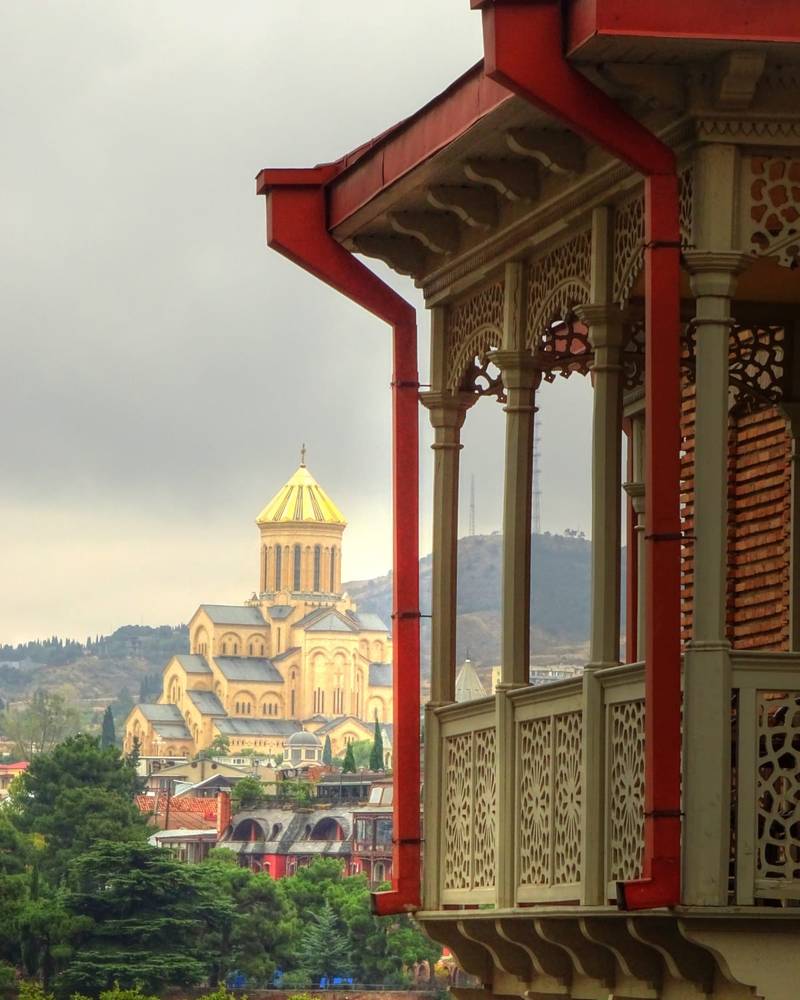
It’s also worth being honest about what a framework like this can’t tell you. It can’t tell you how Tbilisi’s more compressed, hillier city layout will feel day to day compared with Belgrade’s flatter sprawl, or whether Georgia’s currently favorable Individual Entrepreneur treatment will still look the same in three years once its own tax authorities revisit it. Rules that are attractive precisely because they’re new are also the rules most likely to be revised - that cuts both ways, and it’s a reason to verify current terms directly rather than plan five years out on either country’s marketing copy.
Check your Serbia eligibility in 60 seconds
What we’d tell a friend
If you want the simplest possible one-year stay with minimal paperwork and don’t mind a nomad-blog-sourced tax reputation you’ll verify yourself once there, Georgia is a reasonable, well-trodden choice. If you’re thinking beyond a single year, want a legal residence status rather than a visa-free clock, and value EU-adjacent logistics, Serbia is worth the extra initial paperwork.
We’d add one more thing a friend deserves to hear directly: don’t let a headline number - Georgia’s “1 year visa-free” or its low IE tax reputation - substitute for asking what you actually want out of the move. A visa-free stay is not a residence permit, no matter how long it runs, and if your real plan is to stay past year one, you’ll eventually need to solve for actual legal status somewhere. Solving for that from the start, even if it costs more paperwork up front, tends to beat solving for it under time pressure once a visa-free clock is running out.
That’s the honest accounting this page is built to give you: not an argument that Serbia beats Georgia everywhere, but the same side-by-side we’d want if we were the ones deciding where to base ourselves next.
Book a free 30-min eligibility call - get a straight answer on whether Serbia fits your situation better than Georgia would.
Sources: PwC Worldwide Tax Summaries - Serbia (accessed July 2026). Georgia-specific tax and visa-free-stay figures should be confirmed directly with Georgian immigration and tax authorities, as no single, dated primary source was independently verified for this comparison in this pass.