Relocate to Serbia
Honest comparison

Serbia vs Montenegro: coastline vs. no minimum threshold

Both are popular soft landings for remote workers and entrepreneurs. They suit different people. Here's the plain-language trade-off - including where Montenegro is the better call.

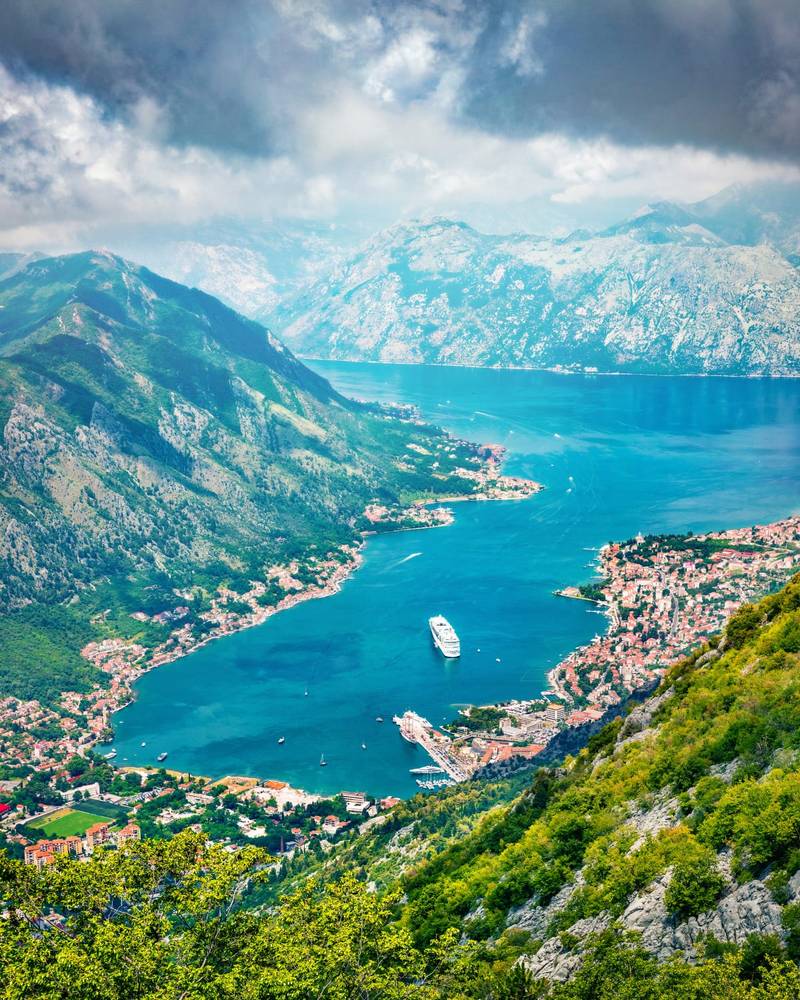
Aerial view of the Bay of Kotor with a cruise ship among the mountains, Montenegro

Serbia vs Montenegro: Which Actually Fits Your Situation?

TL;DR: Montenegro offers coastal lifestyle and a well-known Adriatic property market, but recently introduced a property-value threshold for its residence-by-purchase route. Serbia has no minimum investment threshold for its equivalent route and a lower overall cost of living. Montenegro wins on coastline and established EU-candidate momentum; Serbia wins on affordability and unrestricted property-residence access.

Book a free 30-min eligibility call to talk through which fits your actual situation.

The genuine, timely differentiator: Montenegro’s new property threshold

This is the clearest, most concrete, most current data point in this entire comparison, and it’s the reason this page exists now rather than a year ago. Montenegro introduced a property-value threshold of approximately EUR150,000 for its residence-through-property-purchase route, reported as taking effect in early 2026. Serbia, by contrast, currently has no minimum investment threshold for its equivalent real estate-based residence route.

If you’re comparing the two purely on “can I buy a smaller or less expensive property and still use it to support a residence application,” Serbia currently has a structural edge that didn’t exist as clearly a year ago. Confirm Montenegro’s exact current threshold and any exemptions directly with Montenegrin authorities before relying on this figure for your own planning, since investment-residence thresholds are exactly the kind of rule that gets revised.

This kind of rule change is also a useful reminder that “which country is easier” is a moving target, not a fixed ranking. A year ago, Montenegro’s property route arguably had no meaningful threshold disadvantage against Serbia’s; today it does. Anyone building a five-year plan around a single country’s current investment rules should build in the assumption that those specific numbers may not hold, and should verify them again closer to the point of application rather than relying on any comparison page, including this one, as a frozen-in-time source.

How to choose: a framework

  1. Is coastline and Adriatic lifestyle a core requirement, or a nice-to-have? If core, weight heavily toward Montenegro - Serbia genuinely cannot offer this.
  2. Does your property budget comfortably clear Montenegro’s new ~EUR150,000 residence threshold? If not, and the property route matters to your plan, Serbia’s no-minimum-threshold route becomes the more accessible option by default.
  3. How much does everyday affordability outside a resort-town premium matter to your long-term budget? If you’re optimizing monthly cost of living rather than a one-time property investment, Serbia’s inland cities generally come in lower.
  4. Do you want a maturing professional/tech ecosystem or a more tourism-and-lifestyle-oriented one? Belgrade fits the former; coastal Montenegro fits the latter.

These four questions rarely point in the same direction for the same person, which is exactly why this decision resists a one-line answer. Someone chasing coastal lifestyle who also has a tight property budget may find Montenegro’s new threshold genuinely rules out the property route for them specifically, even though the lifestyle pull is real - in that case, Serbia’s unrestricted route or a different Montenegrin visa category both deserve a second look before defaulting to “Montenegro no matter what.”

It’s worth being honest, too, about what a table and a framework can’t capture: how a resort-paced coastal town feels to live in for a full year, off-season, once the summer tourist energy fades, versus Belgrade’s steadier year-round urban rhythm. That’s a lifestyle question better answered by an extended visit in the shoulder season than by any comparison page.

Check your Serbia eligibility in 60 seconds

What we’d tell a friend

If coastline is non-negotiable and your property budget clears Montenegro’s new threshold comfortably, Montenegro is a legitimate, well-established choice with a genuinely different lifestyle profile than Serbia offers. If you want unrestricted access to a property-based residence route, lower everyday costs, and a more developed remote-work ecosystem, Serbia is worth serious consideration - particularly now that Montenegro’s threshold has narrowed one of its previous advantages.

One more thing worth saying plainly: don’t let the euro-adoption detail do more work in your decision than it deserves. It removes a genuine friction point for eurozone movers, but it isn’t the same thing as EU membership, and it shouldn’t be mistaken for a broader signal that Montenegro’s regulatory environment is more “European” than Serbia’s across the board. Weigh it as one practical convenience among several, not as a tiebreaker on its own.

That’s the honest version of this comparison: not an argument for Serbia over Montenegro, but the same side-by-side accounting we’d want if we were the ones choosing where to put down roots.

Book a free 30-min eligibility call - get a straight answer on whether Serbia fits your situation better than Montenegro would.

Sources: PwC Worldwide Tax Summaries - Serbia (accessed July 2026). Montenegro-specific property-threshold, tax, and visa figures should be confirmed directly with Montenegrin government sources, as the property-threshold change was reported as recent as of this writing and no single, dated official primary source was independently verified for this comparison in this pass.


Side by side

The comparison, without the spin.

Directional comparison for someone weighing a property-based or lifestyle move.

What matters Serbia Where we operate Montenegro
Residency ease No minimum threshold Self-employment/entrepreneurship route, family reunification, or real estate purchase with no minimum investment threshold. Property-purchase residence route now subject to a reported ~EUR150,000 threshold (effective 2026); employment and business-registration routes also exist.
Typical timeline Typical, not guaranteed - varies by municipality and route. Typical, not guaranteed - varies by route and municipality; confirm current expectations with Montenegrin immigration authorities.
Cost of living Lower inland Belgrade and Novi Sad generally undercut coastal Montenegrin towns on rent and dining. Coastal areas (Kotor, Budva, Tivat) carry a tourism-driven premium, particularly in peak season; inland Montenegro is more cost-comparable to Serbia.
Corporate/income tax 15% flat corporate income tax, sourced to PwC Worldwide Tax Summaries. Historically marketed a competitively low flat corporate tax rate; confirm current exact rate directly with Montenegrin tax authorities.
EU membership / currency Not an EU member; uses the Serbian dinar. Euro + candidate momentum Not an EU member but an EU candidate country; has unilaterally adopted the euro despite not being in the eurozone.
Path to citizenship Naturalization typically available after 3 years of continuous permanent residence, subject to requirements. Separate residence-period and requirement structure - confirm current rules directly with Montenegrin authorities.
Tech/remote-work scene More developed Growing Belgrade tech and coworking scene, increasingly recognized beyond 'cheap outsourcing hub' framing. Smaller, more tourism- and lifestyle-oriented remote-work presence, concentrated in coastal towns during peak season.
Quality of life / coastline EU-adjacent inland lifestyle, established healthcare infrastructure, Belgrade nightlife and food scene. Coastline Adriatic coastline, mountain access, a resort-lifestyle feel in coastal areas - a genuinely different profile, not simply better or worse.
Best fit Affordability and an unrestricted property-residence route. Coastal lifestyle and euro-denominated transactions, budget permitting.
The fair take

Where each one genuinely wins.

Serbia is the better call if…

  • You want a real estate-based residence route without a minimum investment threshold - the clearest, most current structural advantage since Montenegro's 2026 change.
  • Inland cost of living and everyday affordability matter more to you than coastline.
  • You want a maturing tech and remote-work ecosystem rather than a primarily lifestyle/tourism-driven one.
  • You want tax clarity you can verify to one sourced figure rather than assuming parity.

Montenegro is the better call if…

  • Coastline and Adriatic lifestyle are a genuine, category-different draw Serbia - landlocked - simply cannot match.
  • Montenegro's unilateral euro adoption removes currency-conversion friction for eurozone movers.
  • If your budget comfortably clears the new property threshold, the residence-by-property route still offers a straightforward path.
  • Montenegro's EU-candidate trajectory is, by most public assessments, further along in certain respects.

We only handle Serbia - but we'd rather tell you when it isn't your best fit than sell you a move you'll regret.

Our verdict

Montenegro wins on coastline; Serbia wins on unrestricted access and affordability.

If coastline is non-negotiable and your property budget clears Montenegro's new threshold comfortably, Montenegro is a legitimate, well-established choice with a genuinely different lifestyle profile. If you want unrestricted access to a property-based residence route, lower everyday costs, and a more developed remote-work ecosystem, Serbia is worth serious consideration - particularly now that Montenegro's threshold has narrowed one of its previous advantages.

Common questions

Serbia vs Montenegro: FAQ

Reporting indicates Montenegro introduced a property-value threshold of approximately this amount for its residence-by-purchase route, effective in early 2026. Confirm the exact current figure and any exemptions directly with Montenegrin authorities before relying on it for your own planning.

No. Serbia currently has no minimum investment threshold for its real estate-based temporary residence route, which is a genuine, sourced differentiator following Montenegro's 2026 change.

Serbia's inland cities generally run lower than coastal Montenegro, particularly during Montenegro's tourist season. Inland Montenegro is more cost-comparable to Serbia, though coastal towns carry a real premium.

No, Montenegro is not an EU member, though it is an EU candidate country. It has also unilaterally adopted the euro despite not being in the eurozone - a distinct monetary position from Serbia's.

Belgrade's tech and coworking scene is more developed for non-tourism remote work. Montenegro's remote-work presence is more concentrated in coastal, tourism-adjacent settings.

Neither country's property-based residence route is the same as a citizenship-by-investment program. Both require separate naturalization processes after a qualifying residence period - confirm current requirements directly with each country's authorities.

Yes - see our other honest comparisons, including Serbia vs Georgia and Serbia vs Portugal, for different trade-off profiles depending on what you're optimizing for.

Leaning toward Serbia over Montenegro?

Book a free call. We'll confirm whether it's your best move - and if it is, handle the whole thing.

Book a consultation
Chat with us